Who it serves
Civil, water-resources, and technical engineering teams with a recurring workflow, representative inputs, and a decision-maker who can evaluate a pilot.
Civil Engineering and Infrastructure
I help civil and water-resources teams connect asset records, plans, field notes, and spatial data into clearer engineering workflows: what the data can support, where it falls short, and which repetitive steps are worth automating.
Decision support, not licensed engineering design. I do not provide engineering design, sealing, or certification. Engineering judgment stays with the responsible professional.
Who this is for
Civil, water-resources, and technical engineering teams with a recurring workflow, representative inputs, and a decision-maker who can evaluate a pilot.
General AI training or any work where a sealed engineering judgment would be delegated to a model. A defined AI adoption or vendor decision can instead be scoped as independent advisory.
What you receive
The scope is confirmed during intake. Depending on where you start, the work produces some or all of the following.
Which sources exist, what they cover, where records disagree, and which inputs or decisions are still missing before a workflow can depend on them.
How the Diligence Sprint works for engineering teamsWho does what, which tools and files are involved, where time is spent, and what happens when an output is wrong.
Start smaller with a half-day Workflow TeardownOne bounded pilot, with the deterministic assembly steps separated from the steps that need an engineer, and a clear decision on whether to build it.
AI Workflow Diligence Sprint detailsWhen the decision is yes: a working pilot on representative inputs, deterministic checks around model-assisted steps, and run records a reviewer can inspect.
Custom AI Workflow Pilot detailsAround the project workflow
The scope can stand on its own. Choose these services when the underlying question fits; an engineering team does not need every service in the catalog.
Review an existing workflow, vendor proposal or project checkpoint against the evidence and the consequences of error.
You receiveAI Decision Brief and Advisory Record
Bring: The proposal or candidate workflow, representative cases, failure consequences, security constraints and an accountable technical reviewer.
AI Technical AdvisoryPrepare a source-grounded brief, report or presentation for project reviewers, decision-makers or a defined public audience.
You receiveAudience-Ready Communications Package
Bring: Approved project information, the audience, the decision or explanation needed, and the professionals who approve technical statements.
Technical CommunicationsFor an existing candidate, the AI workflow evaluation option can define a representative test set, source/behavior checks, failure criteria and a limitation report. Implementation of a new test harness is a separate scope when required. For source-grounded requirements tools, the existing Custom AI Workflow Pilot can preserve citations and unresolved items for an engineer's review; it does not interpret requirements with approval authority.
Conditional specialist work: a Process Economics Decision Model fits a defensible process or resource comparison with adequate technical inputs, not a stamped estimate or capital plan. R&D support fits genuine technical development; synthetic-data validation requires an actual synthetic dataset and use case. Funding readiness requires an eligible project and actual solicitation; proposal workflow setup fits recurring federal proposal work.
What you bring
When an input is unavailable, the deliverable records that gap and the dependency it creates. We agree on permitted data handling before using private project material.
Engagement options
A defined advisory or communication assignment can stand alone. Advisory is available as a single review or scoped monthly retainer with no automatic renewal. There is no requirement to purchase every stage.
How the work runs
Start with a recurring process where the hours go into assembly and reconciliation, and the value is in engineering judgment.
Review the records, plans, criteria documents, and field information the workflow uses, and document coverage, gaps, and dependencies.
Mark which steps are deterministic, which could be model-assisted with checks, and which must stay with the responsible engineer.
Agree whether a pilot is worth funding. If it is, build one bounded tool with review points and stop conditions.
Read more about how I build and review AI-assisted workflows and how engagements are scoped.
Completed assessment · anonymized
A completed infrastructure data-readiness assessment reconciled fragmented municipal asset, GIS, and environmental information; assessed availability and coverage; and documented missing inputs and dependencies for coordinated capital planning.
Scope boundary. The work assessed data readiness. It did not select project priorities, produce a capital plan, or deliver engineering design.
Workflow prototypes · synthetic data
These design studies show how repetitive engineering data work could be made easier to inspect. The visual examples use synthetic data and are not delivered client systems.
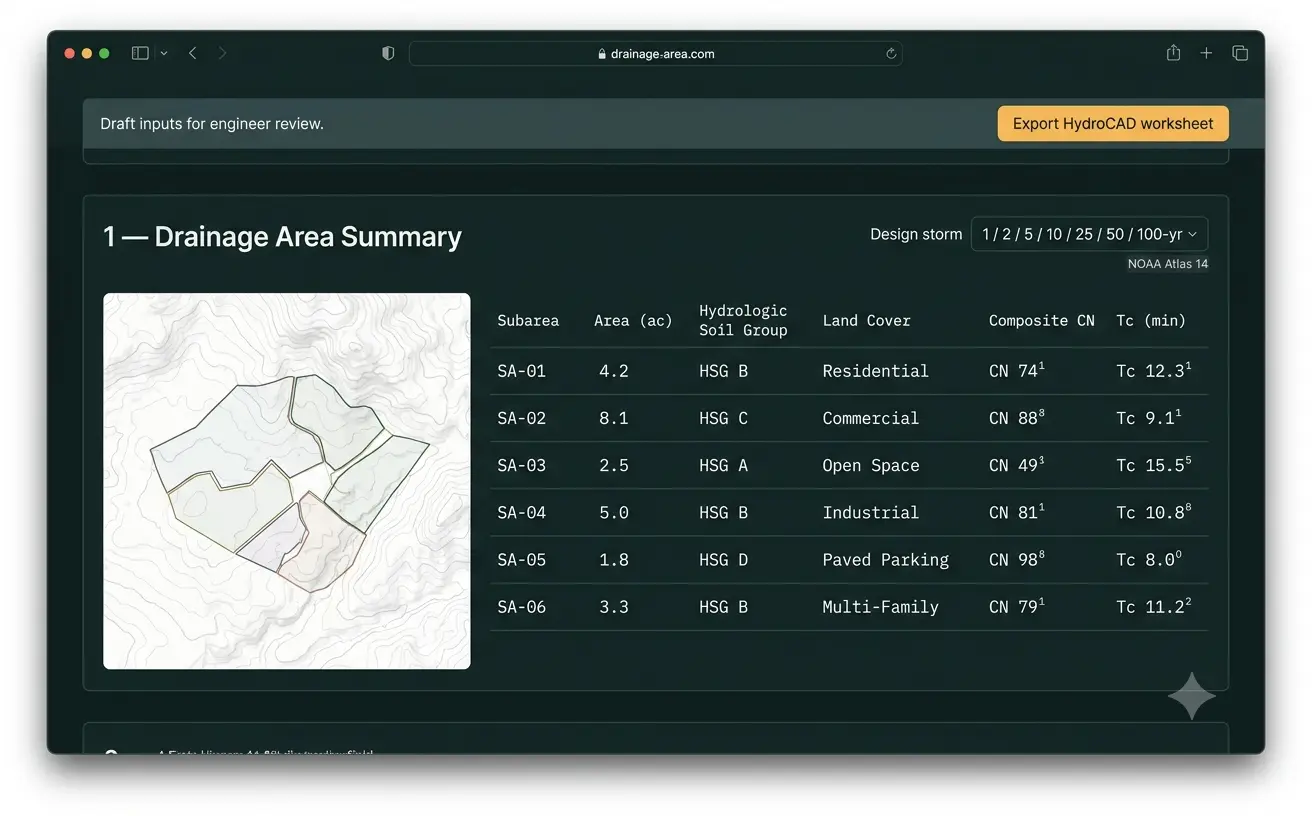
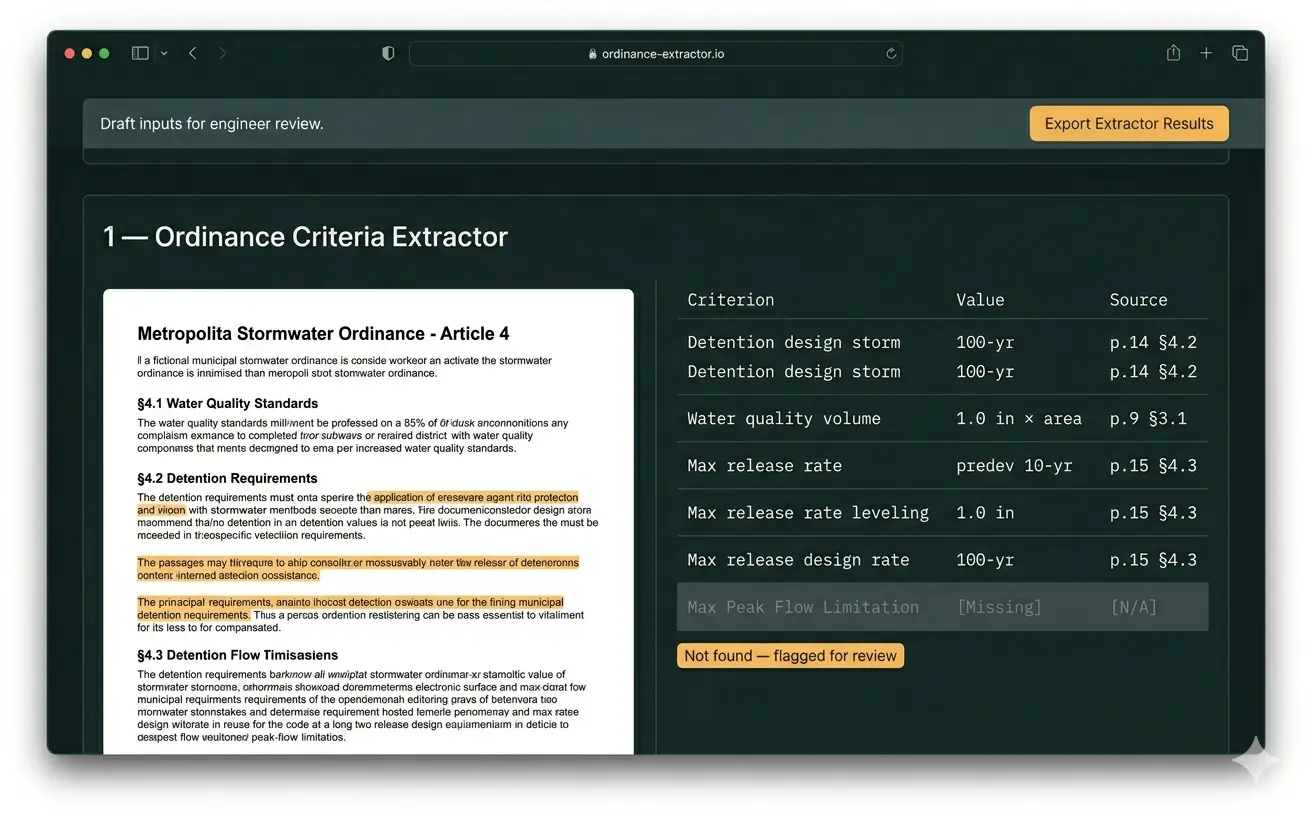
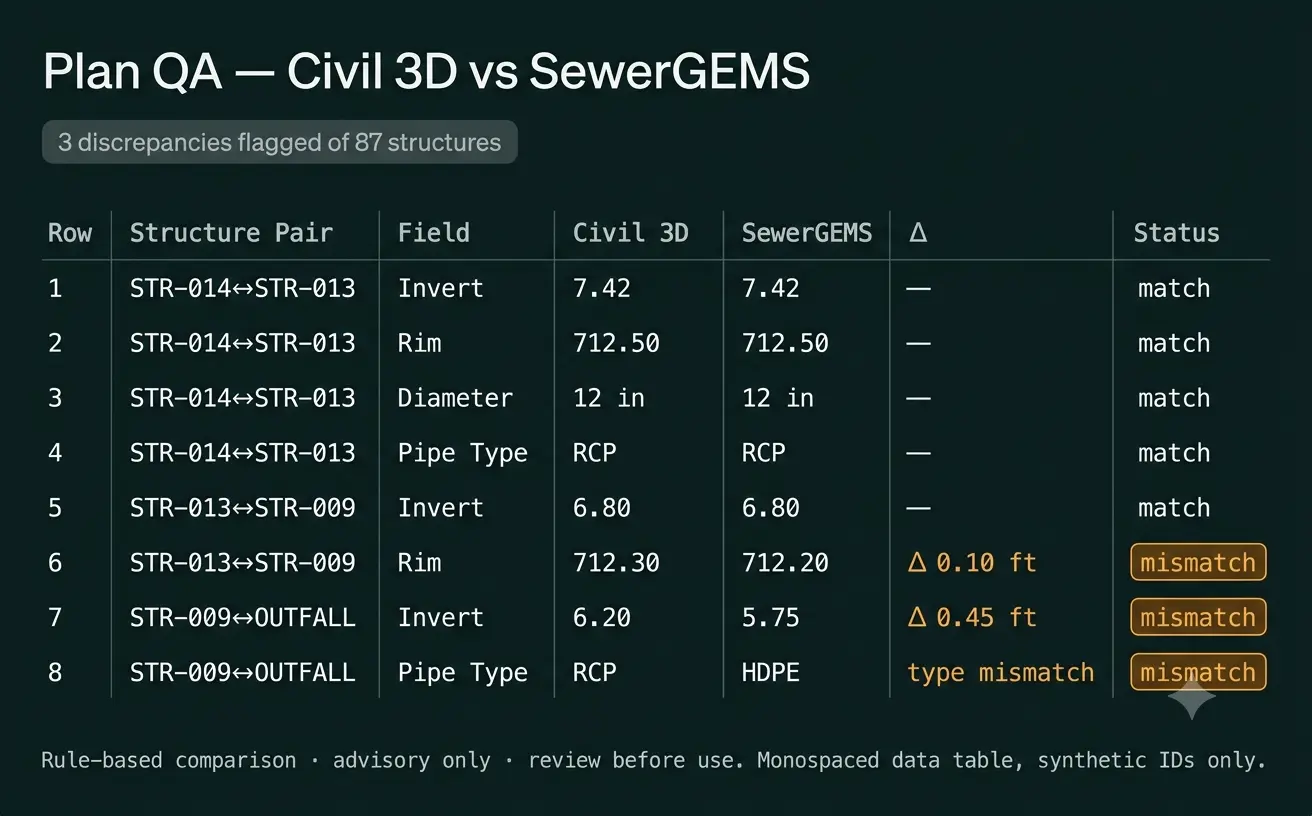
These are prototype concepts, not completed engineering engagements. The images are illustrative mock-ups with synthetic values, not screenshots of a deployed tool. Read the synthetic-data prototype walkthrough.
Research prototypes · maturity shown
Related infrastructure research explores evidence-led briefings, drawing data, field records, and spatial questions. Each item below is limited to the work described; none is presented as a deployed client product.
Organize source material and preserve the trail behind an answer.
Turn a bounded source set into a reviewable brief with traceable status.
Compare selected native exports and flag ambiguous matches.
Check completeness, units, timestamps, and change history in an exported record.
Answer a small, defined set of questions against pinned source snapshots.
Prepare evidence for transparent condition and prioritization research.
These research prototypes do not have a public interactive demo. Appropriate independent and engineering review is required before any operational use.
Limitations
Start with the workflow
We can map the inputs, make the gaps visible, and decide whether a small tool is worth building.
Talk through an engineering workflow