Data modeling & product development · Commercialized product
Turn complex data into a product customers can use.
A useful model has to help someone make a decision, fit the way they work and make economic sense. I led a program at a major animal-nutrition company that brought those pieces together, taking scientific analysis through product development and commercialization.
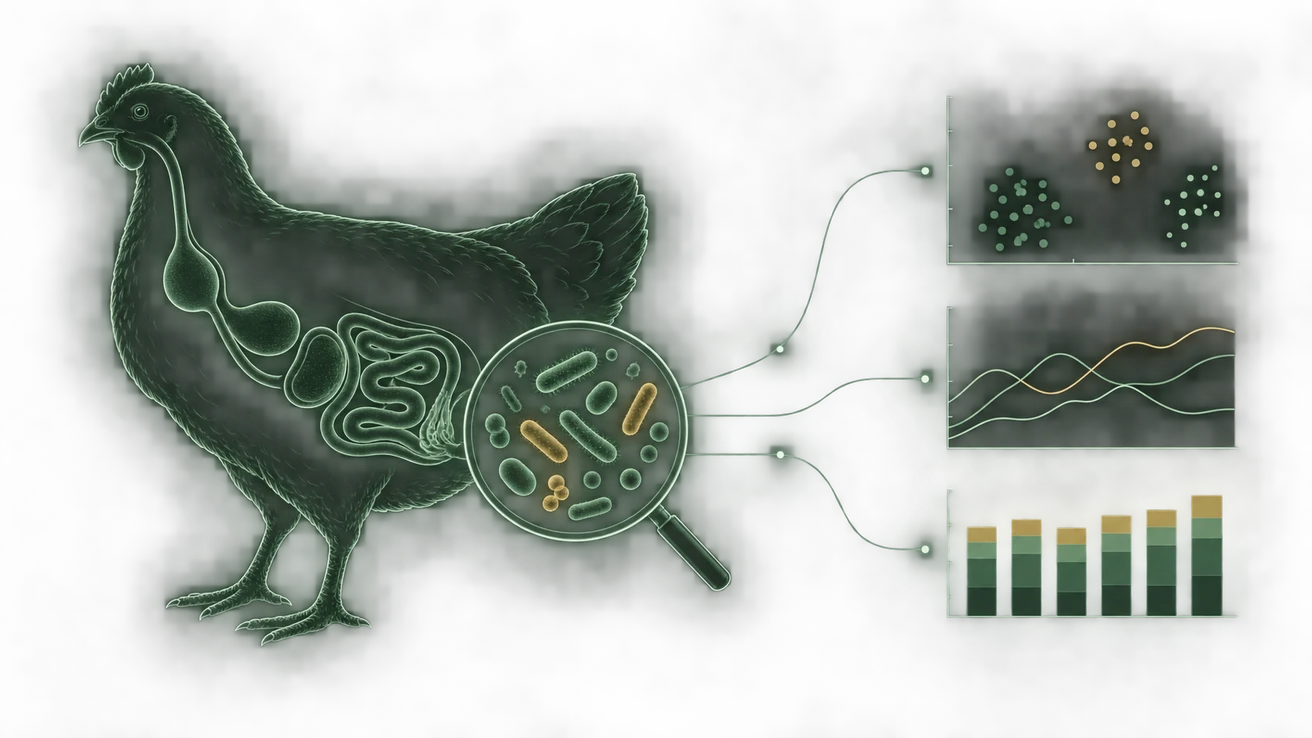
The original application was poultry microbiome analysis. The work demonstrates a broader capability: understand the data, build the model, shape the customer offer and coordinate delivery.
Major animal-nutrition company · 2015–2018
R&D Manager, Data Science and Poultry Nutrition
- $180 → $25
- Per-sample analysis cost, making routine customer testing economically practical.
- ~$2 million
- Initial project budget. The program subsequently became an ongoing commercial engagement.
Relevance to your business
What useful decision could your data support?
You may have information that could help customers choose, help your team prioritize work or support a new service. The starting questions are practical: what decision matters, which data supports it, what can a model tell us and what would make the output worth using?
This program required those decisions alongside the scientific analysis. I built models, shaped the customer offer and led the entire go-to-market strategy. Today, that experience informs consulting work on analytical tools, technical products and new business ideas.
A smaller engagement might begin with a feasibility assessment or a focused prototype. The example here is historical work in animal nutrition; any new application needs its own data, validation and business case.
Science and data
Make biological measurements useful to a decision-maker.
Poultry producers and nutrition scientists needed practical recommendations from microbial data. I built models from microbial and genomic measurements and used experimental design and multivariate analysis to examine relationships with biological and production outcomes.
The analytical work included shotgun metagenomic and 16S rRNA data using QIIME-based workflows. I translated model outputs into recommendations and developed field-deployable analysis methods and technical materials for use beyond controlled laboratory settings.
Product and commercialization
Build the customer economics into the product.
I owned and planned the entire go-to-market strategy. That meant defining the ideal customer profile, finding and recruiting early adopters, explaining the value of participation and shaping monetization to reduce the financial risk of trying the program.
Reducing analysis cost from $180 to $25 per sample made routine customer testing economically practical. The analytical method and the commercial approach had to work together for adoption to be feasible.
The program became a fully commercialized product. My responsibility spanned the scientific development, the recommendations customers received and the strategy for bringing those customers into the program.
Program leadership
Coordinate the work across reporting lines.
I managed the effort across scientists, bioinformaticians, nutrition teams, product leaders and commercial stakeholders. The go-to-market work included senior client relationship managers, salespeople and country and product-line directors, with much of the commercial coordination in Europe.
Several contributors held greater formal authority than I did. Delivery depended on clear priorities, coordination and influence across those reporting lines. The initial project budget was approximately $2 million; that figure describes the program's starting scale, rather than an annual budget or sole spending authority.
Public record
Commercial recognition and co-inventorship.
The commercial product received a 2023 Gold Edison Award, after my tenure. The public award announcement describes the product and its microbiome decision-support purpose.
I'm a named co-inventor on US20230298688A1, “Microbiome analytics such as for animal nutrition management”, published in 2023. This is a published patent application, distinct from my granted yeast patents.