Turn a technical idea into a proposal a reviewer can assess.
An illustrative proposal review connects a technical concept to funding criteria, evidence gaps and a revision plan. It shows how I structure a difficult technical decision before more writing or development begins.
Illustrative service walkthrough; not a client result.
The review method is real. The proposal, findings, schedule, and decision shown here are illustrative.
The setup
Imagine a two-person deep-tech founding team with a Phase I SBIR draft that has already missed one cycle. In this example, they have a working bench prototype, preliminary external validation, and an early technical-feasibility case. The draft itself does not communicate any of that. The Specific Aims are buried under three paragraphs of literature framing. The commercialization section reads like a hedge fund pitch. Heilmeier Question 4 ("What's new in your approach?") is answered three times in three contradictory ways.
The review question is whether to proceed, revise before submission, redirect to a better opportunity, or stop. That decision has to follow the solicitation criteria and available evidence, not a generic score.
What the Sprint produces
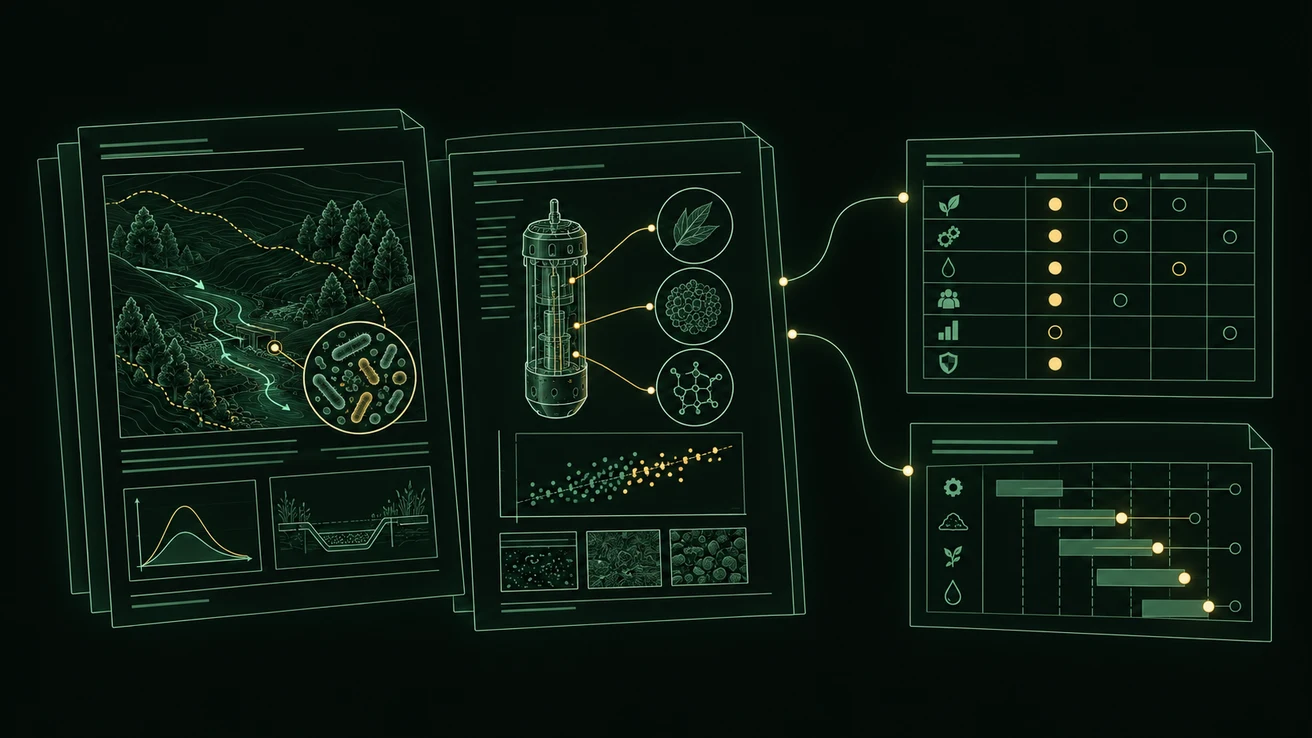
The Sprint is scoped after intake around a single named deliverable: a Heilmeier Gap Map that anchors each material finding to the applicable solicitation or agency criterion and a specific location in the current draft. The Map is not a generic redline or a promised number of comments.
- Solicitation-specific review map translating the actual evaluation criteria into a traceable review framework.
- Prioritized gap and risk register separating submission blockers, competitiveness risks, evidence gaps, and editorial improvements.
- Technical-thesis pass clarifying innovation, feasibility, success measures, team fit, and commercialization logic in the team's own voice.
- Revision roadmap and decision memo recommending proceed, revise, redirect, or stop, with evidence needs, owners, and target dates.
How findings come out of the draft
The Heilmeier Gap Map is built in three passes. The first pass is a structural read: every Specific Aim, every commercialization paragraph, every reviewer-eye signal gets tagged against the eight Heilmeier questions. Anywhere a question is unanswered, anywhere it is over-answered, anywhere the answer to one criterion contradicts another, becomes a candidate finding.
The second pass is a red-team read. The same questions go back to the draft, but the framing flips: what is the least charitable plausible reading of this paragraph under the stated review criteria? This pass looks for weaknesses that a structural completeness check cannot find.
The third pass is a cost ranking. Each finding gets a one-line "what this costs at the panel" annotation. A buried novelty claim and a contradiction between technical aims do not carry the same consequence. The ranking determines what must change before submission and what can wait.
The rewritten thesis
A Heilmeier-style technical thesis is one short, dense paragraph that answers all eight Heilmeier questions in the order a reviewer would ask them, in the team's own voice. Most stalled SBIRs do not have one. The Sprint produces one as the load-bearing artifact. Every other section of the resubmit can be regenerated from it on a tight clock.
In this example, the pass would compress the thesis until the innovation, risk, success measures, and commercial consequence are legible. The amount of rewriting depends on the starting draft.
The optional funder-facing brief
When appropriate to the agency and stage, the work can include a standalone brief that does not assume the reader has seen the full proposal. It is an optional artifact, not a universal deliverable and not a promise of access to or feedback from a program officer.
The go / no-go output
The decision memo names the conditions that must be true for the proposal to proceed. Depending on the opportunity, those conditions may involve technical evidence, team capacity, eligibility, commercial support, compliance, or schedule.
The recommendation is one of four paths: proceed, revise before submission, redirect to a better opportunity, or stop. The client makes the decision using the evidence and tradeoffs in the memo.
Measurable outcome
This page demonstrates the review architecture, not a measured engagement result. Actual scope and timing are set after the solicitation, draft maturity, proposal length, deadline, and available evidence are reviewed. The Sprint is sold on traceability and decision discipline, not a finding count, fixed turnaround, or guaranteed score.
Fit boundaries
Not for: SBIR mills that bill percent-of-award. For: deep-tech founders and small businesses with one or two genuinely good agency targets who are leaving non-dilutive money on the table because the existing draft cannot survive a red-team read. If you do not already have a working prototype and at least one external validation in hand, the Sprint is premature.